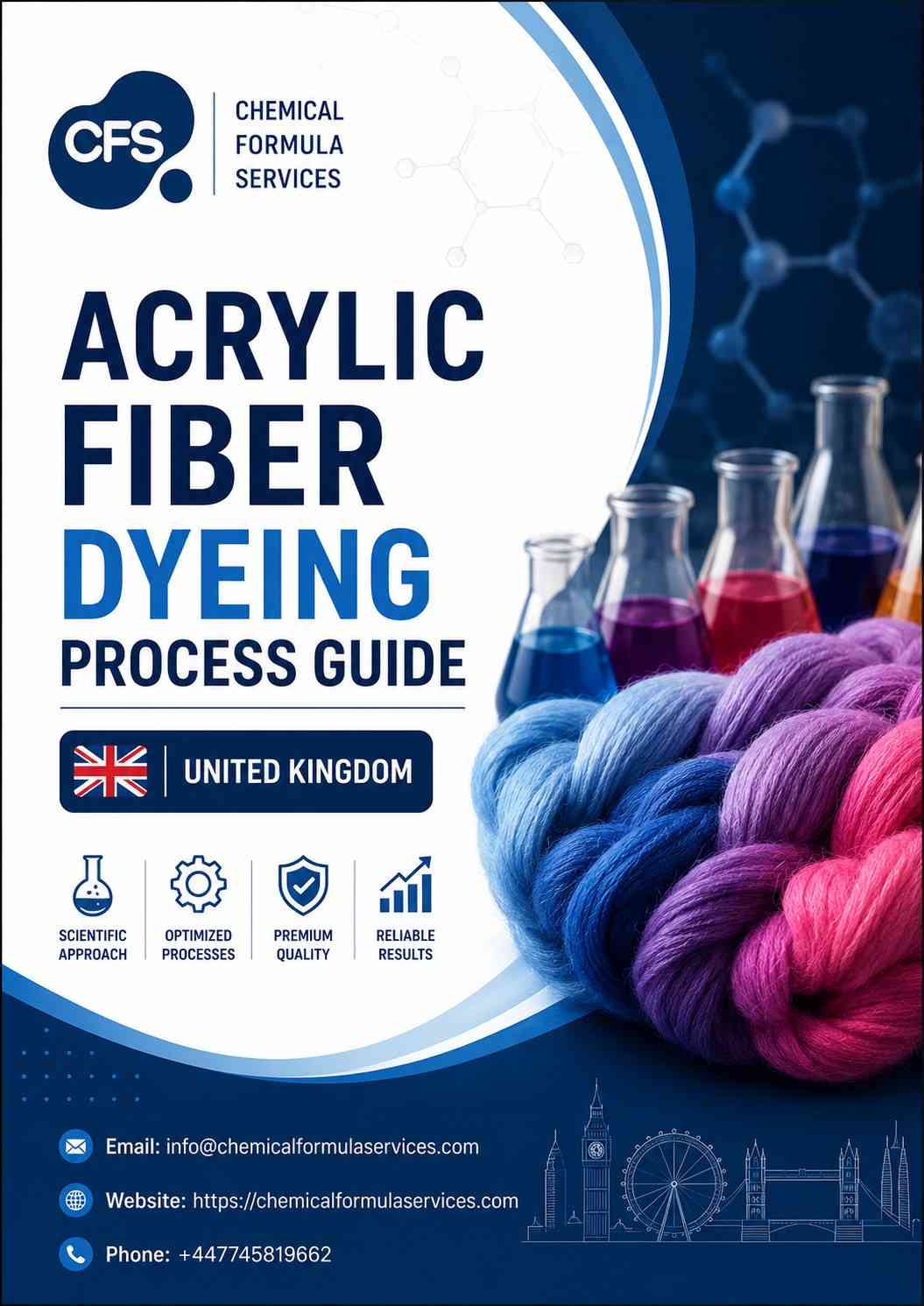
Acrylic Fiber Dyeing Process Guide
$ 67.50
Table of Contents ToggleIndustrial Acrylic Fiber Dyeing Formulation Guide (Modern Cationic Dyeing System)This guide includes advanced dyeing technologiesThis guide provides detailed operating procedures covering:Comprehensive troubleshootingQuality Controling Methods of Acrylic Fiber Dyeing ProcessIdeal For This GuideKey Benefits of This GuideOur Other Related PDF Industrial Acrylic Fiber Dyeing Formulation Guide (Modern Cationic Dyeing System) Master the science and technology of industrial acrylic fiber dyeing with this comprehensive Industrial Acrylic Fiber Dyeing Process Guide, developed specifically for textile manufacturers, dye houses, chemical formulators, textile engineers, and production professionals. This practical handbook provides factory-proven formulations and optimized dyeing processes using modern cationic (basic) dye systems to achieve exceptional color uniformity, maximum dye exhaustion, superior fastness properties, and consistent production quality. Designed for both medium-scale and large-scale textile manufacturing, this guide covers every stage of the acrylic fiber dyeing process—from fiber preparation and auxiliary selection to optimized dye bath formulation, process control, and quality assurance. Each formulation is structured for commercial production, enabling manufacturers to reduce production costs while maintaining high-quality dyeing performance. The handbook features a wide range of commercial dyeing formulations suitable for acrylic fibers, acrylic yarns, knitted fabrics, woven fabrics, blankets, carpets, upholstery textiles, and technical textiles. Multiple industrial dyeing systems are included, ranging from economical production methods to premium export-quality processes with outstanding washing, rubbing, perspiration, and light fastness. This guide includes advanced dyeing technologies Modern Cationic (Basic Dye) Dyeing Systems High Exhaustion Dyeing Formulations Level Dyeing Technology for Uniform Shade Development Deep Shade and Jet Black Dyeing Processes Brilliant Shade Dyeing Systems High Fastness Export Quality Dyeing Methods Low Temperature Energy-Saving Dyeing Technology Eco-Friendly Low-VOC Dyeing Systems ZDHC-Oriented Sustainable Dyeing Practices REACH-Conscious Processing Guidelines Low Salt and Low Water Consumption Dyeing Processes Anti-Streak and Anti-Barre Dyeing Techniques Shade Correction and Color Matching Procedures Laboratory-to-Bulk Production Scale-Up Methods This guide provides detailed operating procedures covering: Dye bath preparation Water quality requirements Auxiliary chemical selection Temperature programming pH control Heating and cooling profiles Dye dosing sequence After-treatment procedures Softening and finishing recommendations Production optimization techniques Comprehensive troubleshooting These below chapters help manufacturers quickly identify and resolve common dyeing defects, including: Uneven dyeing Patchy appearance Barre marks Streak formation Low dye exhaustion Poor color yield Shade variation Crocking Poor wash fastness Poor rubbing fastness Poor light fastness Fiber damage Excessive foaming Water quality problems Batch-to-batch inconsistency Quality Controling Methods of Acrylic Fiber Dyeing Process The guide also includes laboratory and production quality control methods covering: Color strength (K/S value) Shade evaluation Dye exhaustion measurement Washing fastness Rubbing fastness Perspiration fastness Light fastness pH testing Water hardness testing Process reproducibility Final product inspection To support efficient manufacturing, the handbook contains recommendations on: Machinery required for acrylic fiber dyeing Dye kitchen setup Laboratory equipment Production equipment Utility requirements Process automation Safety procedures Environmental management Wastewater treatment considerations Production cost optimization Every formulation is presented using commercially realistic raw materials with recommended trade names, supplier examples, processing conditions, and industrial manufacturing practices suitable for modern textile dye houses. Whether you are establishing a new dyeing facility, upgrading an existing textile operation, developing new commercial dyeing systems, or improving production efficiency, this formulation guide serves as a complete technical reference for achieving consistent, high-quality acrylic fiber dyeing while meeting current international textile manufacturing standards. Ideal For This Guide Acrylic fiber manufacturers Textile dye houses Yarn dyeing units Fabric dyeing plants Blanket manufacturers Carpet manufacturers Upholstery fabric producers Textile processing companies Textile chemical manufacturers Chemical formulators Textile engineers Textile consultants Quality control laboratories Research and development departments Technical training institutes Key Benefits of This Guide Factory-tested industrial formulations Modern cationic dyeing technology High dye exhaustion and color yield Excellent shade reproducibility Superior color consistency Reduced reprocessing and production waste Improved productivity and operational efficiency Lower chemical and energy consumption Enhanced washing, rubbing, and light fastness Environmentally responsible dyeing practices Scalable laboratory-to-production processes Commercially feasible and industrially manufacturable systems This Industrial Acrylic Fiber Dyeing Formulation Guide (Modern Cationic Dyeing System) is an essential resource for textile professionals seeking to produce premium-quality acrylic yarns and fabrics with consistent coloration, superior fastness, optimized production efficiency, and compliance with modern environmental and quality standards. It is designed to help manufacturers reduce costs, improve process reliability, and deliver export-quality dyed textiles for today’s competitive global market. Our Other Related PDF Textile DYE fixing agent Formulation Textile Blanket Adhesive Formula