
Acid & Disperse Dye Paste Formula – Complete Manufacturing Guide
$ 72.00
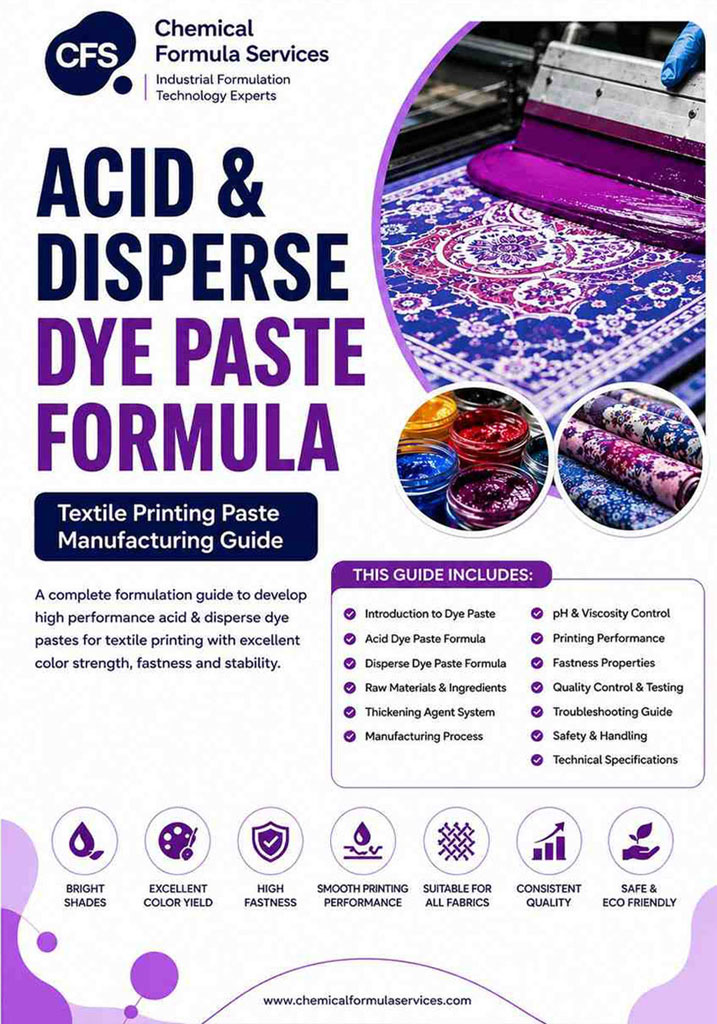
Table of Contents ToggleWhat is Acid & Disperse Dye Paste Formula?Benefits of Acid & Disperse Dye Paste FormulaApplicationsRaw Materials UsedManufacturing ProcessQuality Control What is Acid & Disperse Dye Paste Formula? Acid & Disperse Dye Paste Formula is a specialized textile printing formulation used for preparing high-quality printing pastes for fabric decoration and coloration. The formulation combines thickening systems, dye dispersion technology, and printing auxiliaries to produce sharp, vibrant, and durable textile prints on a variety of fabrics. The guide covers both acid dye printing systems for protein fibers and disperse dye printing systems for synthetic fibers such as polyester. Benefits of Acid & Disperse Dye Paste Formula Excellent print definition Bright and vibrant shades High color yield Good penetration into fabric Excellent wash fastness Improved color consistency Suitable for textile screen printing Commercial-scale production capability Applications Acid Dye Applications Silk printing Wool printing Nylon textile printing Fashion fabrics Decorative textiles Disperse Dye Applications Polyester printing Sportswear fabrics Sublimation-related textile applications Synthetic textile decoration Industrial textile printing Raw Materials Used Acid dyes Disperse dyes Thickening agents Sodium alginate Synthetic thickeners Dispersing agents Wetting agents pH regulators Fixing agents Preservatives Manufacturing Process Dye preparation Thickener preparation Paste mixing Dispersion Filtration Quality testing Packaging Quality Control Viscosity testing Color strength evaluation Print sharpness testing Dispersion stability pH testing Storage stability Wash fastness assessment Thickening Dye Paste: Thickening dye paste is a type of dye formulation used in textile printing. It contains a thickening agent that increases the viscosity of the dye solution, making it suitable for printing techniques such as screen printing or block printing. The thickening agent helps to control the flow of the dye paste, preventing it from spreading or bleeding on the fabric and allowing for precise and sharp prints. It ensures that the thickening dye paste formulation stays in place during the printing process and provides better color definition. Acid Dye: Acid dyes formulation are a class of dyes that are primarily used to color protein-based fibers, such as silk, wool, and nylon. These dyes have a strong affinity for acidic conditions and require the use of an acidic medium, such as acetic acid or citric acid, during the dyeing process. Acid dyes are known for their vibrant and intense color shades and excellent color fastness properties. They can be used for both solid color dyeing and printing applications on protein-based textiles. Dispersed Dye Formulation: Dispersed dyes are a type of dye specifically designed for synthetic fibers, particularly polyester. These dyes are insoluble in water and require a dispersing agent to break them down into small particles and disperse them evenly in the dyeing or printing medium. Dispersed dyes are typically used for dyeing polyester fabrics, as they have good color fastness properties and can achieve vibrant and even color shades. They can be used for both solid color dyeing and printing applications on polyester fabrics. The choice of dye type, whether acid or dispersed, depends on the fiber type being dyed or printed. Acid dyes are suitable for protein-based fibers like silk and wool, while dispersed dyes are specifically formulated for synthetic fibers like polyester. The selection of the appropriate dye type ensures optimal color performance and color fastness on the specific fabric. Additionally, thickening dye paste can be formulated with either acid or dispersed dyes, depending on the desired application and fabric type.